Daily editionFree · Ad-free · Sourced
The Daily Lift

Good news, every day. Substantial, verifiable progress.

Breakthroughs

Adaptive–based cascaded PI–PID controller for load frequency regulation with real time verification

Researchers propose a cascaded PI–PID controller that integrates the Set‑Membership Affine Projection Algorithm (SMAPA) for adaptive parameter updates to address load frequency control in single‑area and interconnected two‑area power systems. The approach was evaluated in simulations and real‑time two‑area validation under step and random load disturbances, wind power fluctuations and parameter uncertainty, with frequency‑domain stability analysis showing lower overshoot and faster settling time than several conventional PI/PID designs.

Original reporting: PLOS · Open Science · by Abdullah M. Alharbi · 1 min read

Originally published by PLOS · Open Science: First briefed by The Daily Lift: Last updated:
Illustrative photo: Vintage black-and-white photograph of a power/control room interior: two people at a large drafting-style control desk facing a long wall filled with analog gauges, switches and schematic diagrams.
Illustrative photo: Ministry of Information Photo Division Photographer — The British Grid System- the work of the Central Electricity Board in Wartime, c March 1945 D24270.jpg · Wikimedia Commons · Public domain. Changes: photo cropped and resized by The Daily Lift. If the remote photo is unavailable, a labelled original TDL illustration is shown instead.

Why this is good news

Operators of single‑area and interconnected two‑area power systems could see improved frequency regulation because the cascaded PI–PID with SMAPA demonstrated lower overshoot and faster settling time than several conventional PI/PID designs. Those performance gains were observed both in simulations and in real‑time two‑area validation under step and random load disturbances, wind power fluctuations and parameter uncertainty, suggesting improved transient response to disturbances.

What happens next

What additional evidence is needed to assess the controller’s performance across different interconnection sizes, longer‑duration real‑time operation, and a wider range of wind and load disturbance profiles?
Read the full story at PLOS · Open Science

This is a short original brief by The Daily Lift, not the publisher's full article. Credit and copyright for the original reporting remain with PLOS · Open Science.

Report a problem with this story · Corrections policy

Related stories

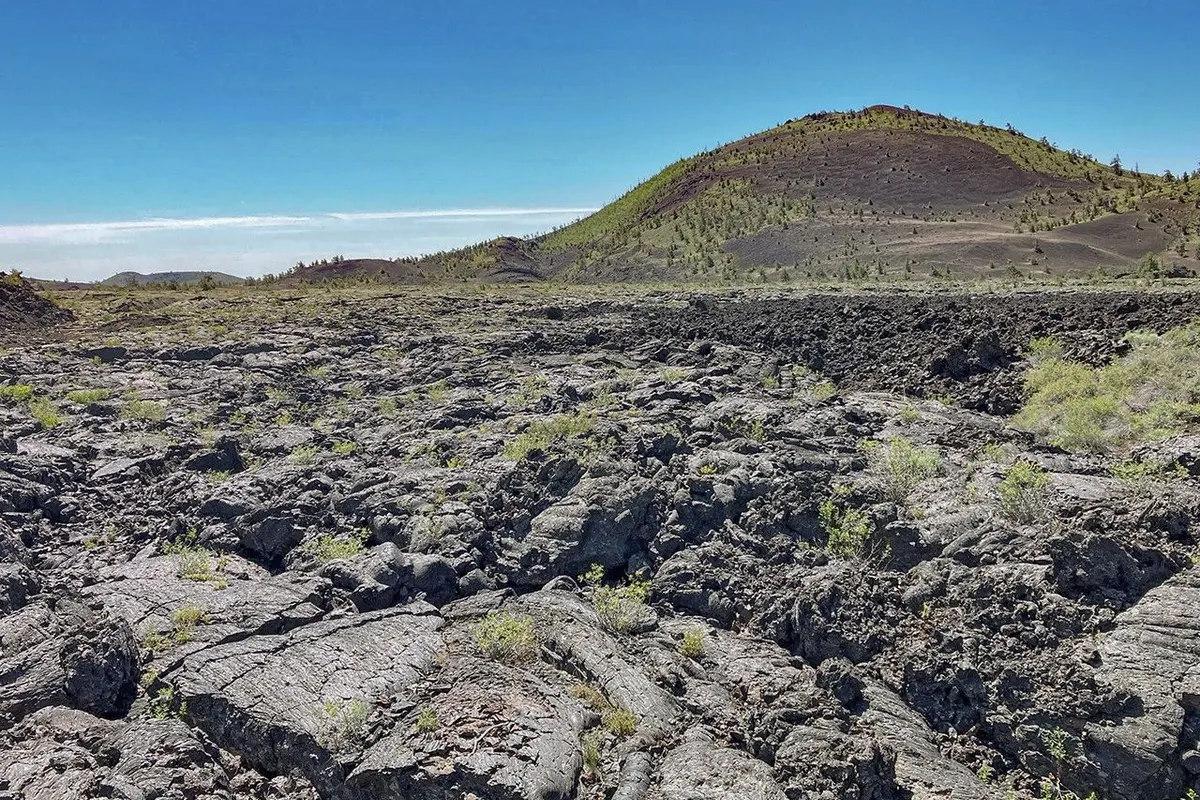
Illustrative photo: Rough basaltic lava field in the foreground with jagged, broken flows and sparse vegetation, and a low cinder-cone hill under a clear blue sky.
Illustrative photo: NASA Earth Observatory images by Michala Garrison, using Landsat data from the U.S. Geological Survey. Story and 2024 photo of Craters of the Moon lava and cinder cone by Lindsey Doermann. — Moonscapes of Idaho (154207 - cratersmoon lava pho lrg).jpg · Wikimedia Commons · Public domain. Changes: photo cropped and resized by The Daily Lift.

Breakthroughs

Martian Volcanic Discovery Could Be ‘Smoking Gun’ in Search for Life

Researchers report detection of trace volcanic gases on Mars, including hydrogen chloride seeping from volcanic rifts. Professor Daniel Mège said the find was extremely challenging to locate, and scientists say these gases could be an important clue in the search for life on Mars.

Source: Good News Network · Brief published · 1 min read

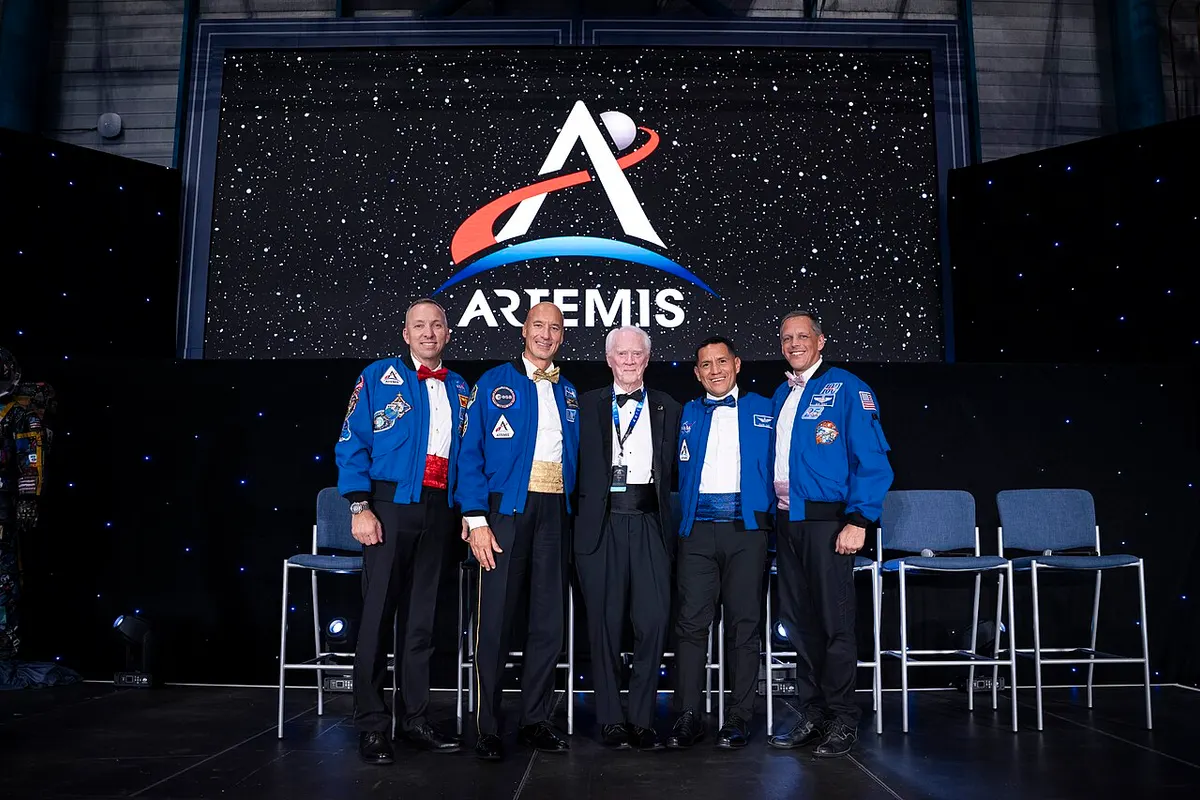
Illustrative photo: Five men standing on a stage in front of a large screen showing the Artemis logo; four wearing blue flight-style jackets and one in a dark suit, with a star-speckled backdrop and chairs at the sides.
Illustrative photo: Purpose Entertainment/Shanna Lockwood — From left- NASA astronauts Randy Bresnik, Luca Parmitano, Russell “Rusty” Schweickart, Frank Rubio, and Bob Hines onstage at the Artemis Celebration Gala at NASA’s Kennedy Space Ce (astronauts-across-generations-share-the-stage).jpg · Wikimedia Commons · Public domain. Changes: photo cropped and resized by The Daily Lift.

Breakthroughs

La NASA destina un millón de dólares al reto estudiantil Base Lunar

On Sunday, 8 November 2026, NASA announced the student competition “Base Lunar,” awarding one million dollars in prize funding. The award was unveiled during the MAX POWER event at the Kennedy Space Center Visitor Complex in Florida.

Source: NASA · Brief published · 1 min read

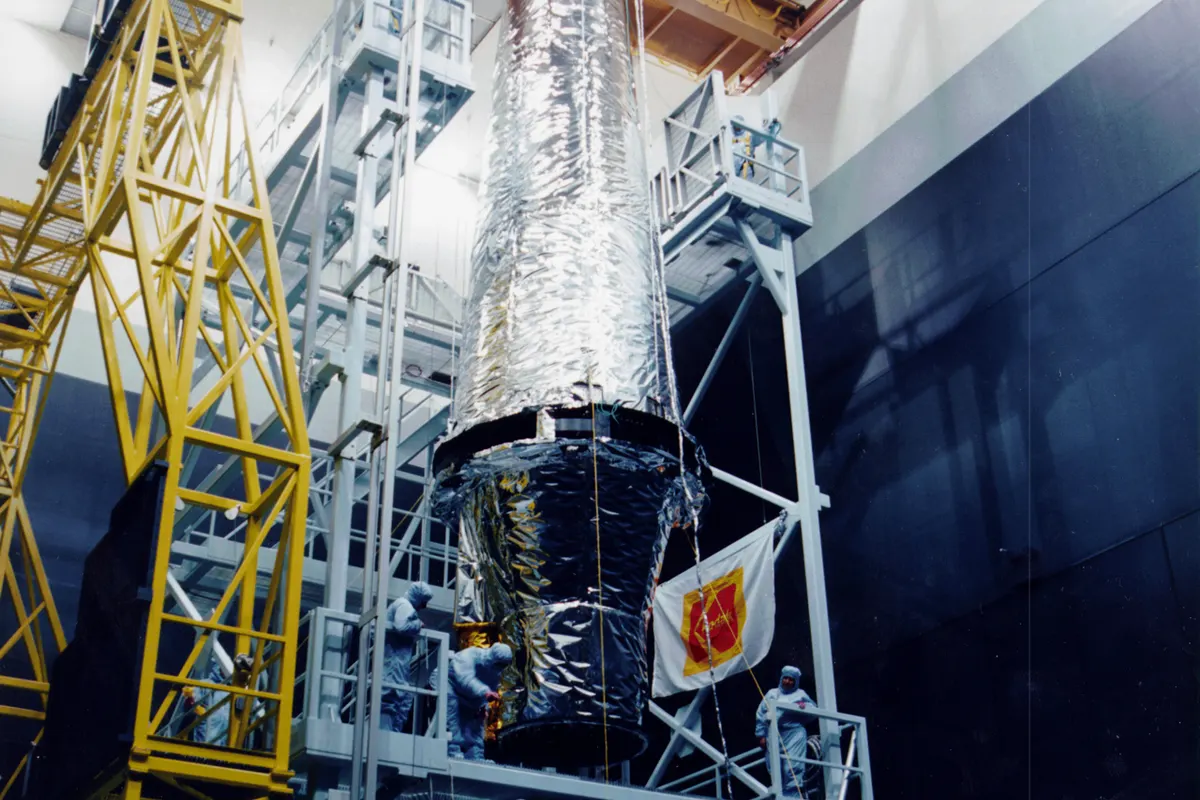
Illustrative photo: Cylindrical space telescope or observatory hardware wrapped in reflective thermal blanket, suspended in an assembly frame inside a cleanroom with technicians in cleanroom suits on surrounding platforms.
Illustrative photo: NASA — Chandra X-ray space observatory - TeleAsmblyHigh-300.png · Wikimedia Commons · Public domain. Changes: photo cropped and resized by The Daily Lift.

Breakthroughs

NASA’s Chandra Finds Source of Star’s Mysterious Outbursts

Astronomers using NASA’s Chandra X-ray Observatory have identified a previously hidden companion that triggers repeated outbursts from a giant, unstable star. A new study in The Astrophysical Journal reports the companion pulls material from the massive star every 113 days as the two orbit.

Source: NASA · Brief published · 1 min read