
Daily editionFree · Ad-free · Sourced
The Daily Lift

Good news, every day. Substantial, verifiable progress.

Repair

Dogs Can Sniff-Out Invasive Plant Species With High Accuracy to Curb Their Destruction

In Germany, scientists from Leipzig trained volunteer-handled sniffer dogs to detect invasive plant species and evaluated their field performance. The study found these dog-handler teams located invasive plants in the wild with about 75% accuracy.

Original reporting: Good News Network · by Good News Network · 1 min read

Originally published by Good News Network: First briefed by The Daily Lift: Last updated:
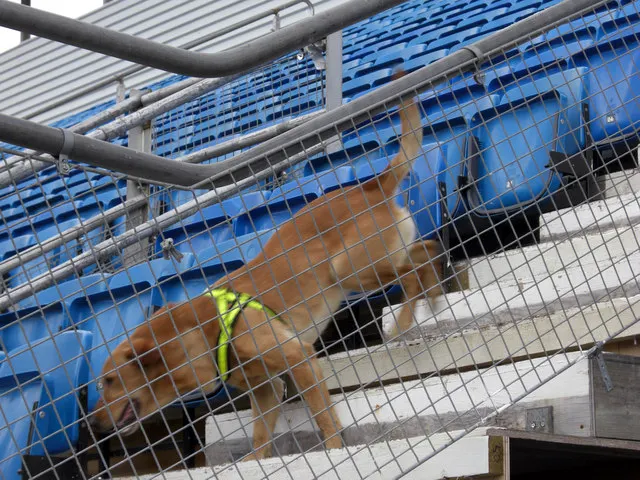
Illustrative photo: A medium-brown dog wearing a fluorescent yellow harness sniffing along concrete steps and blue plastic stadium seats, seen through metal railings.
Illustrative photo: michael ely — Sniffer dog in action - geograph.org.uk - 928627.jpg · Wikimedia Commons · CC BY-SA 2.0. Changes: photo cropped and resized by The Daily Lift. This adapted photo is shared under the same licence, CC BY-SA 2.0. The licence applies to the photo only, not to the story text. If the remote photo is unavailable, a labelled original TDL illustration is shown instead.

Why this is good news

Demonstrating that volunteer-handled sniffer dogs located invasive plants in the wild with about 75% accuracy provides a measurable field detection result. That matters because it could support efforts to curb the destruction caused by those invasive species.

What happens next

How reproducible are the reported ~75% accuracy results across different invasive plant species and among different volunteer handlers?


Read the full story at Good News Network

This is a short original brief by The Daily Lift, not the publisher's full article. Credit and copyright for the original reporting remain with Good News Network.

Report a problem with this story · Corrections policy

Related stories

Original The Daily Lift illustration for Repair, not a photograph
Original illustration by The Daily Lift, not a photograph.

Repair

Fish Stocks Thrive Thanks to This Pink Seaweed and Locals Who Protected It

Ten years after Scotland banned industrial scallop dredging, residents of the Summer Isles report the seabed is thriving and their pink maerl beds have been protected. Islanders say those protections have coincided with a rebound in local fish stocks and are being celebrated as a major win for both community and marine life.

Source: Good News Network · Brief published · 1 min read

Original The Daily Lift illustration for Repair, not a photograph
Original illustration by The Daily Lift, not a photograph.

Repair

Glowworms Shine Again in the UK from Larvae Reared Pro Bono in Garden Shed

Glowworms have reappeared at a North Yorkshire reserve after 100 years following pro bono efforts by local conservationist Peter Cooper. He collected and bred glowworm larvae in his garden shed and released them into the reserve, and the reserve manager credited Cooper’s work for their return.

Source: Good News Network · Brief published · 1 min read